What is SuperMemory.ai?
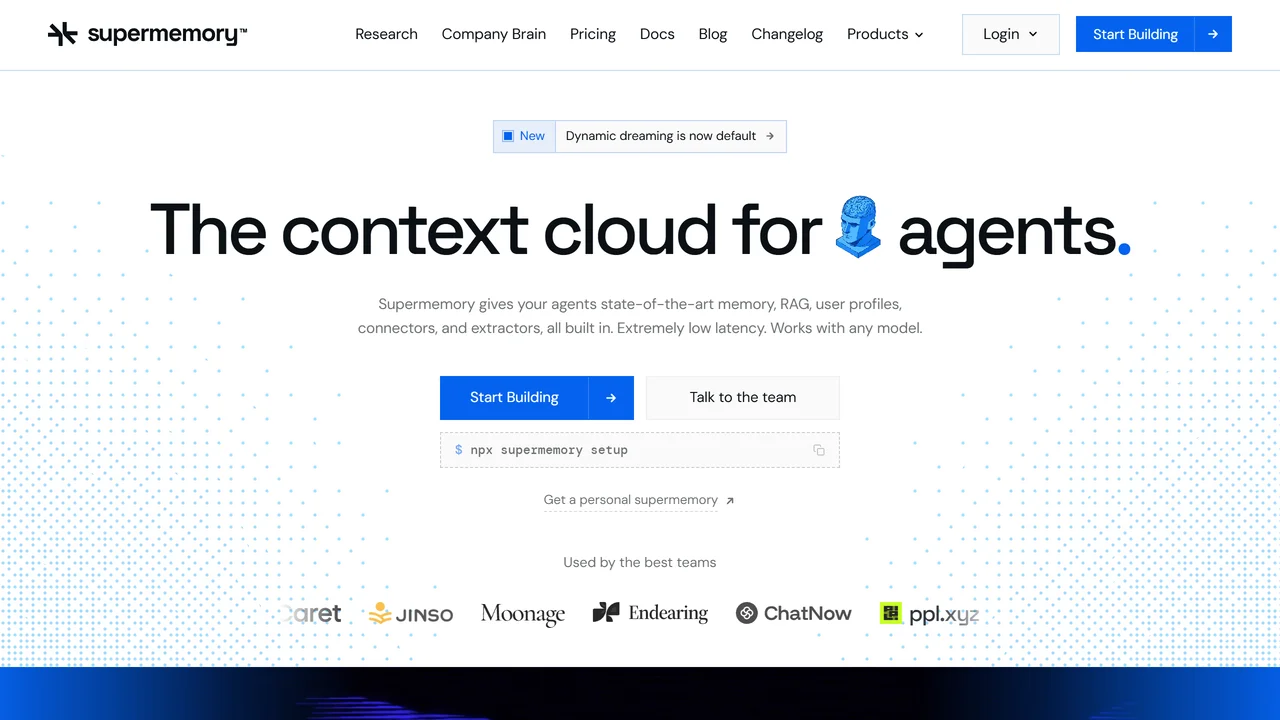
SuperMemory.ai is a context engineering platform designed to serve as the memory layer for AI agents. It provides state-of-the-art persistent memory, retrieval, and understanding capabilities, enabling agents to remember user preferences, behaviors, and identity across sessions. The platform is built around seven core primitives: Memory, Retrieval, Filesystems, Profiles, Connectors, Parsing, and Understanding.
Memory is persistent, structured, and stored as a knowledge graph using a custom user understanding model, powered by dynamic dreaming and a custom graph engine. Retrieval offers hybrid search, reranking, and structured context for documents with sub-300ms latency, ensuring agents can access relevant information quickly. Filesystems provide a real POSIX mount on macOS and Linux, allowing agents to use standard commands like ls, cat, and grep for semantic search and automatic indexing of any file format. Profiles maintain coherent preference, behavior, and identity context across sessions, so agents remember the person behind the conversation.
Connectors integrate with Slack, Notion, Drive, Gmail, GitHub, S3, and custom sources, automatically syncing changes in real time without manual imports or ETL. Parsing converts PDFs, web pages, images, audio, and raw files into agent-ready memory objects with smart chunking that preserves meaning across document boundaries. Understanding allows clustering, summarizing, and explaining user signals without data export, running against memory in place.
SuperMemory.ai is used by top teams to power enterprise APIs, developer plugins, and a personal app. It works with any model and offers extremely low latency. Use cases include building AI assistants that remember user history, enhancing customer support with contextual knowledge, and creating personalized user experiences. Technical details include a single API for all primitives, developer console for API keys and usage docs, and support for multiple data sources. The platform is ideal for developers and enterprises looking to give their AI agents a reliable, scalable memory layer.
Use Cases
Key Features
persistent memory knowledge graph storage hybrid search sub 300ms retrieval POSIX filesystem mount automatic file indexing profile management multi source connectors real time sync context engineeringWho is it for?
AI developers, agent builders, context engineers, software engineers, product teams, data scientists, enterprise architects