What is Alfred AI?
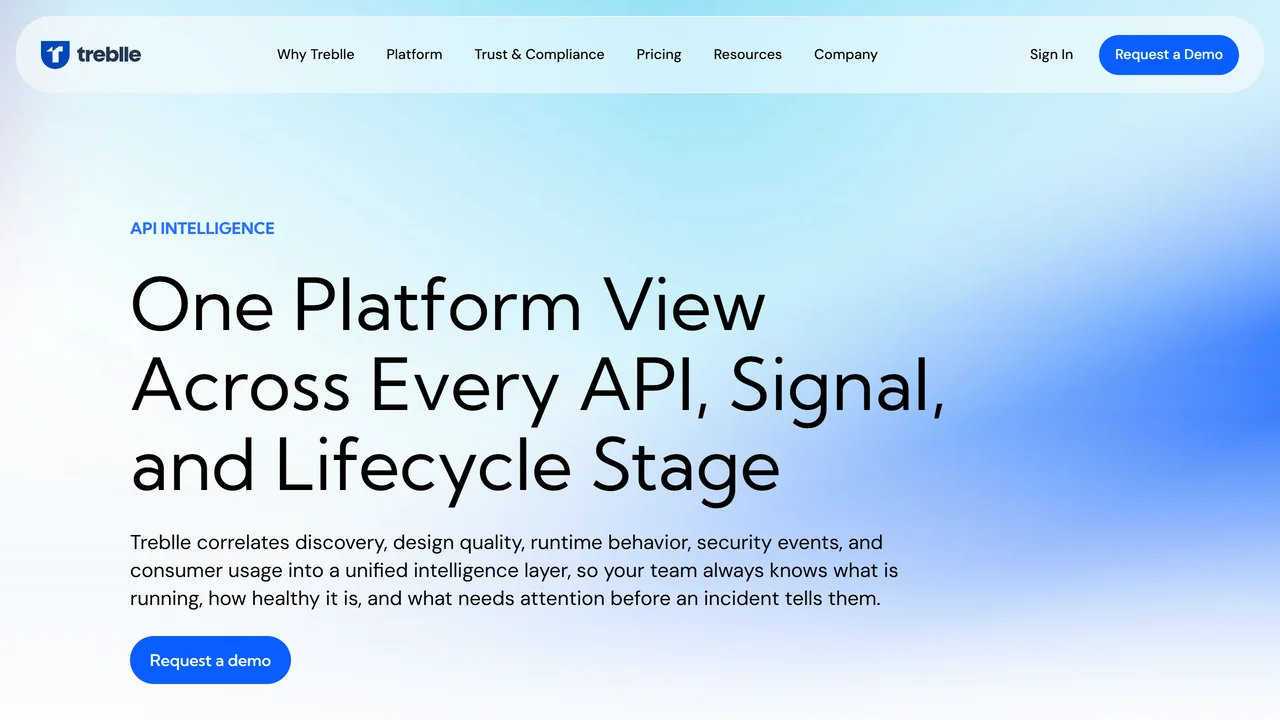
Alfred AI is an API intelligence platform that provides a unified view of your entire API ecosystem. It continuously discovers APIs across source code repositories, API gateways (like Kong), and live traffic, building a self-updating inventory of every endpoint, regardless of how it was deployed or documented. This solves the common problem of incomplete API registries, ensuring your team always knows exactly what is running.
Alfred AI evaluates each API across multiple dimensions: design quality, runtime performance, security posture, documentation, and compliance. It correlates these signals into a single Composite API Heartbeat score that updates in real time, giving you an at-a-glance health indicator. Predictive risk signals flag APIs likely to degrade before incidents occur, enabling proactive maintenance. Executive dashboards translate complex metrics into actionable insights for leadership.
Key features include real-time threat detection against OWASP API Security Top 10, SQL injection, IP reputation, and 20+ additional threat types. It correlates discovery, design quality, runtime behavior, security events, and consumer usage into a unified intelligence layer. This helps teams understand what is running, how healthy it is, and what needs attention before an incident occurs.
Use cases include API security monitoring, performance optimization, compliance auditing, and inventory management. It is ideal for organizations with complex microservices architectures, multi-cloud deployments (AWS, Azure, GCP), or hybrid on-premises environments. Technical details include support for continuous discovery, integration with popular gateways, and a centralized dashboard for all API metrics.
Alfred AI goes beyond traditional monitoring by correlating runtime signals with design posture and consumer behavior, surfacing risks and opportunities that individual tools miss. It ensures your team can proactively manage API health, security, and compliance across the entire lifecycle.
Use Cases
Key Features
API discovery self updating inventory composite API heartbeat predictive risk signals real time threat detection design quality evaluation runtime performance monitoring security posture assessment executive dashboards unified intelligence layerWho is it for?
API developers, security engineers, DevOps teams, platform engineers, IT managers, CTOs, product managers