What is CT Read?
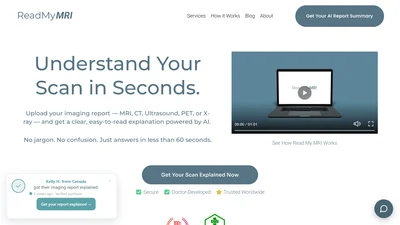
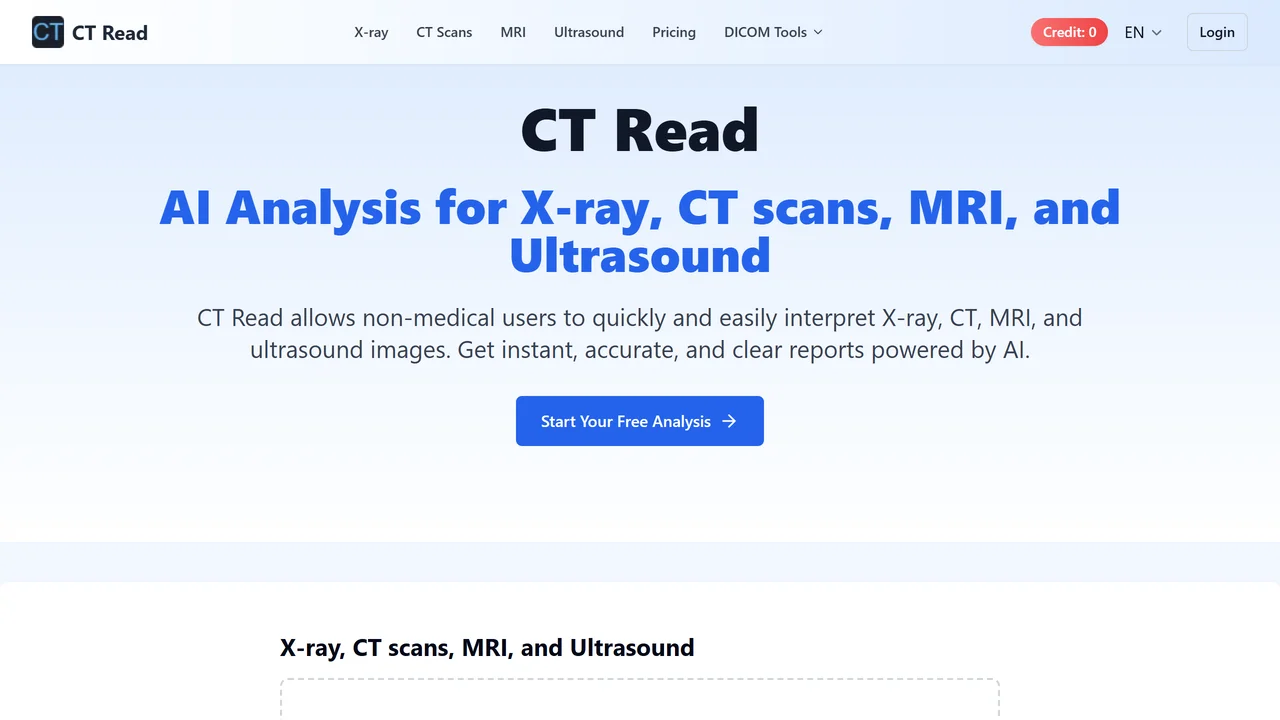
CT Read is an AI-powered medical imaging analysis tool designed to make X-ray, CT scan, MRI, and ultrasound interpretation accessible to non-medical users. By leveraging cutting-edge artificial intelligence, CT Read provides instant, accurate, and clear reports that demystify complex medical images. The tool supports a wide range of file formats, including DICOM files (the standard for medical imaging) as well as common formats like JPG, JPEG, and PNG, making it easy to upload images from various sources.
Key features include rapid analysis of multiple imaging modalities—X-rays, CT scans, PET, MRI, and ultrasounds—all within a single platform. The AI detects abnormalities, highlights areas of concern, and generates detailed reports with key findings, recommendations, and easy-to-understand summaries. The user-friendly interface is designed for both medical professionals seeking quick interpretations and patients wanting to understand their own scans.
Use cases are diverse: after a routine check-up, patients can upload a chest X-ray to receive a clear explanation of any issues; those with complex MRI results can get a breakdown of medical jargon; individuals monitoring bone density can track changes over time to assess osteoporosis risk; expecting parents can obtain detailed explanations of ultrasound images; athletes can interpret injury-related X-rays or MRIs to aid recovery planning; and dental patients can understand their dental X-rays, including cavities or gum health.
Technically, CT Read employs advanced deep learning models trained on vast datasets of medical images to ensure high accuracy in abnormality detection. The platform processes images quickly, enabling faster diagnosis and treatment decisions. It supports various body parts, including brain, chest, abdomen, bones, and more, providing a comprehensive health overview. CT Read is accessible via a web interface, requiring no software installation, and prioritizes user privacy and data security.
Use Cases
Key Features
AI powered analysis multi modality support DICOM file support abnormality detection detailed report generation user friendly interface instant interpretation clear summariesWho is it for?
patients, medical professionals, radiologists, healthcare providers, non, medical users, diagnostic centers