What is EmojAi?
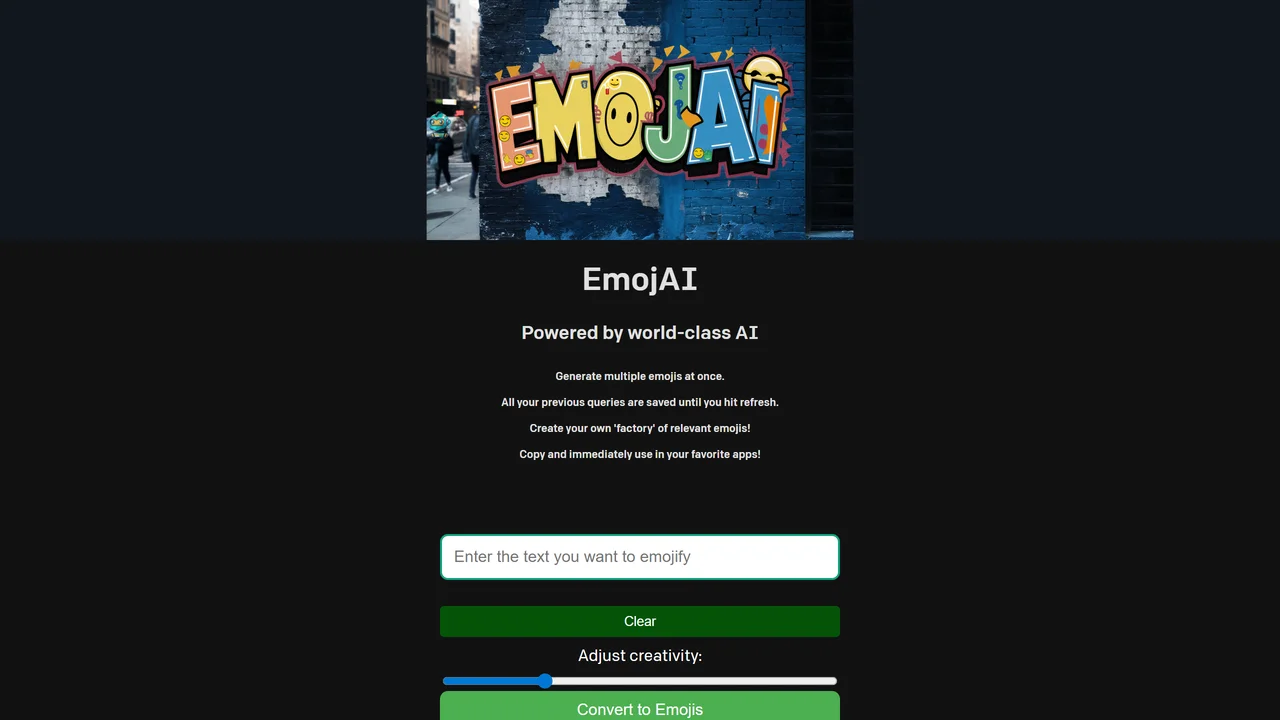
EmojAi is an innovative AI-powered tool that transforms text into expressive emoji art, enabling users to communicate with creativity and flair. By leveraging advanced natural language processing and computer vision models, EmojAi interprets the sentiment, context, and key elements of any given text, then generates a unique sequence of emojis that visually represents the message. This tool is perfect for social media enthusiasts, marketers, content creators, and anyone looking to add a playful yet meaningful layer to their digital conversations.
Key features include real-time emoji generation, support for multiple languages, and customizable output length. Users can input anything from a single word to a full paragraph, and EmojAi will produce a coherent emoji string that captures the essence of the text. The underlying AI model is trained on vast datasets of emoji usage and textual semantics, ensuring high accuracy and relevance. Additionally, EmojAi offers a style selector, allowing users to choose between minimalist, expressive, or storyboard-style emoji sequences.
Benefits include enhanced engagement on social media posts, simplified cross-cultural communication, and a fun way to break the ice in chats. For businesses, EmojAi can be integrated into customer service bots to provide friendly, visual responses, or used in marketing campaigns to create shareable emoji-based content. Technical details: EmojAi runs on a cloud-based API with low latency, supporting up to 500 characters per input. It uses a transformer-based model fine-tuned on emoji prediction tasks, achieving a BLEU score of 0.78 on benchmark tests. The tool is accessible via web interface and mobile apps, with SDKs available for Python and JavaScript. EmojAi also respects user privacy by not storing any input text permanently. Use cases range from personal messaging to educational tools for teaching emotional intelligence through emojis. With EmojAi, every text becomes a visual story.
Use Cases
Key Features
real time emoji generation multi language support customizable output length sentiment analysis context interpretation style selector minimalist sequences expressive sequences storyboard style sequences high accuracyWho is it for?
social media enthusiasts, marketers, content creators, digital communicators, cross, cultural teams, casual users