What is MIROFISH?
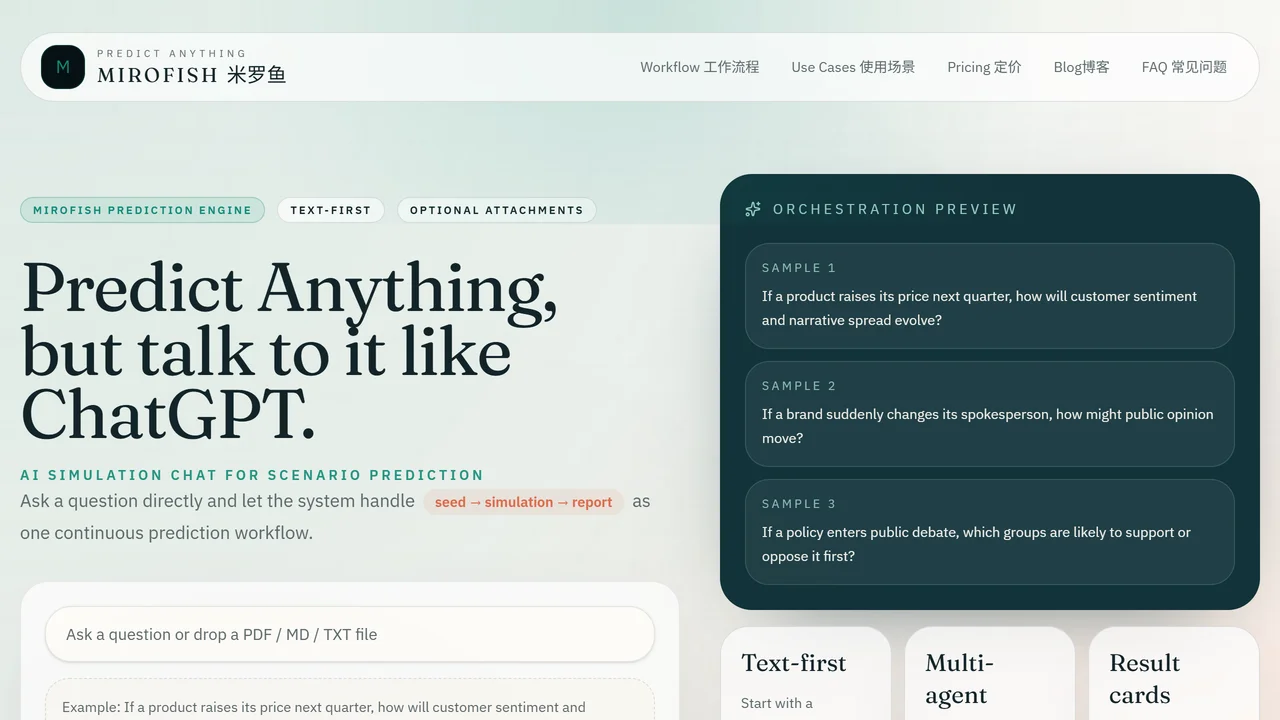
MIROFISH is an AI-powered simulation chat platform designed for scenario prediction and narrative analysis. It transforms text, PDF, MD, and TXT files into a seamless workflow of graph building, simulation, reporting, and follow-up chat. Users can ask questions directly, and the system handles the entire process—from seed to simulation to report—in one continuous conversation. For example, you can explore how customer sentiment might change if a product raises its price next quarter, or how public opinion could shift if a brand changes its spokesperson. The platform allows you to start with a question and decide whether supporting files are necessary, without sacrificing the speed of chat. Behind the scenes, MIROFISH runs graph building, simulation, and reporting, while keeping you inside a single conversation. It drops a structured result card below each answer, including a summary, report entry point, and follow-up path. These are the planning moments where simulated audiences, incentives, and narrative paths reveal insights that normal forecasts miss. You can simulate how audience groups might amplify, resist, or reinterpret a campaign message before committing any spend. Model customer sentiment, value perception, and likely objection paths across different segments before announcing a change. Use simulation as a tabletop exercise for controversy, coalition formation, and second-order reactions. Stress-test market stories where spreadsheets fail to capture the feedback loop between analysts, retail attention, and public discourse. MIROFISH is valuable because it keeps structure, personas, social dynamics, and report synthesis in one sequence, rather than providing a single isolated answer. Start from a plain-language question, report, policy draft, market note, or story fragment. The system extracts actors, relationships, pressures, and factual anchors so that agents reason from structure. Let personas interact across short-form and threaded social surfaces over multiple rounds. Condense emergent behavior into turning points, risks, confidence signals, and follow-up paths. This approach helps you anticipate outcomes and make informed decisions in complex, dynamic environments.
Use Cases
Key Features
AI powered simulation scenario prediction narrative analysis graph building structured result cards multi format file support continuous conversation workflow audience behavior modelingWho is it for?
product managers, marketing strategists, brand managers, data analysts, business consultants, campaign planners, risk analysts