
What is PicoClaw?
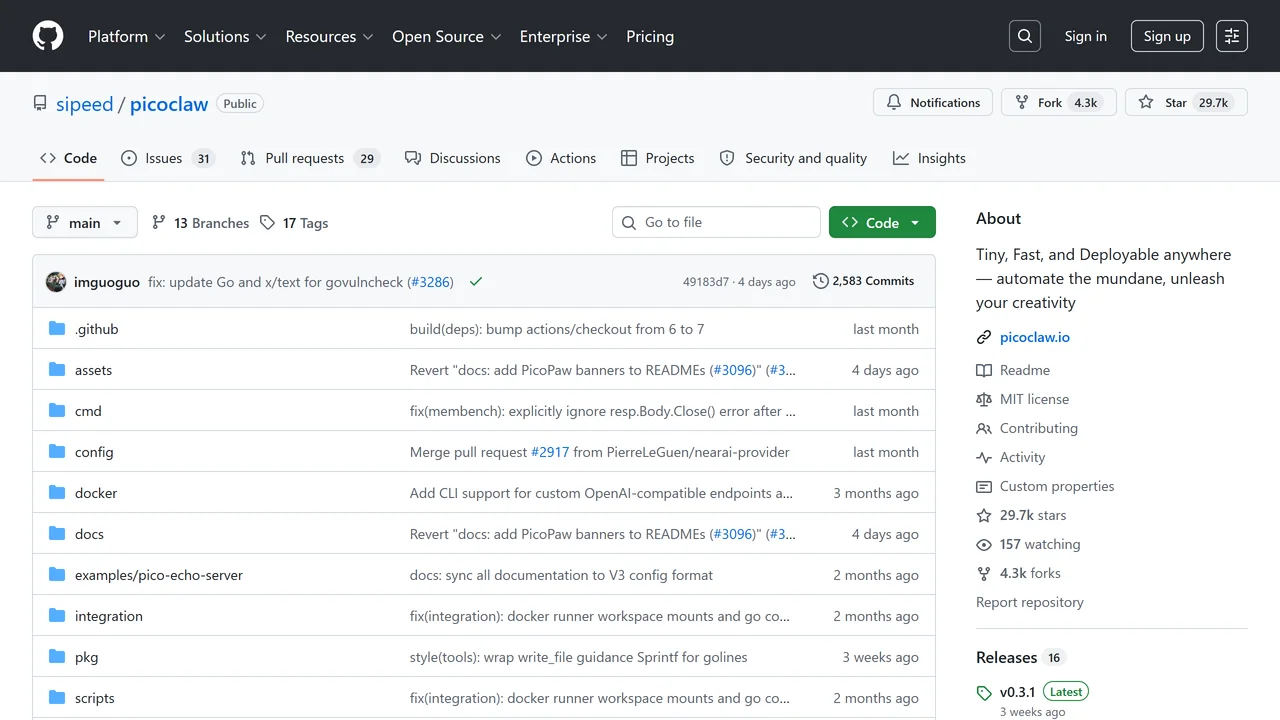
PicoClaw is an ultra-lightweight personal AI assistant designed to automate mundane tasks and unleash creativity. Built entirely from scratch in Go by Sipeed, it is not a fork of any existing project but a ground-up reimplementation inspired by NanoBot. The entire architecture was migrated and optimized through a self-bootstrapping process driven by the AI Agent itself, resulting in a highly efficient and deployable solution.
PicoClaw runs on hardware as cheap as $10, consuming less than 10MB of RAM — that's 99% less memory than OpenClaw and 98% cheaper than a Mac mini. This makes it ideal for edge devices, IoT, and resource-constrained environments. Despite its tiny footprint, it packs powerful features: MCP server management via CLI and Web UI, configurable Sogou-backed web search, tool feedback animations, and support for multiple channels including Matrix and Telegram. The latest release (v0.2.9) introduces pretty print and disable_escape_html defaults, along with numerous bug fixes across providers and channels.
Key use cases include personal automation, AI companionship, and lightweight server-side AI agents. PicoClaw is open-source under an independent project by Sipeed, with an active ecosystem including PicoPaw AI — a platform for creating and sharing playful AI companions. The project emphasizes security and community feedback, with a caution security notice and regular updates.
Technical highlights: written in Go for performance and concurrency; supports zoneinfo from TZ/ZONEINFO env; provides hooks with respond action and comprehensive documentation; includes isolation support and help banner. The project is hosted on GitHub with a growing community and regular releases. Whether you're a developer looking to embed AI into low-cost hardware or a hobbyist exploring AI automation, PicoClaw offers a tiny, fast, and deployable solution that fits anywhere.
Use Cases
Key Features
ultra lightweight design personal AI assistant MCP server management CLI and Web UI configurable web search tool feedback animations multi channel support open source project low memory consumption edge device compatibilityWho is it for?
personal automation users, AI enthusiasts, IoT developers, edge device engineers, open, source contributors, system administrators


