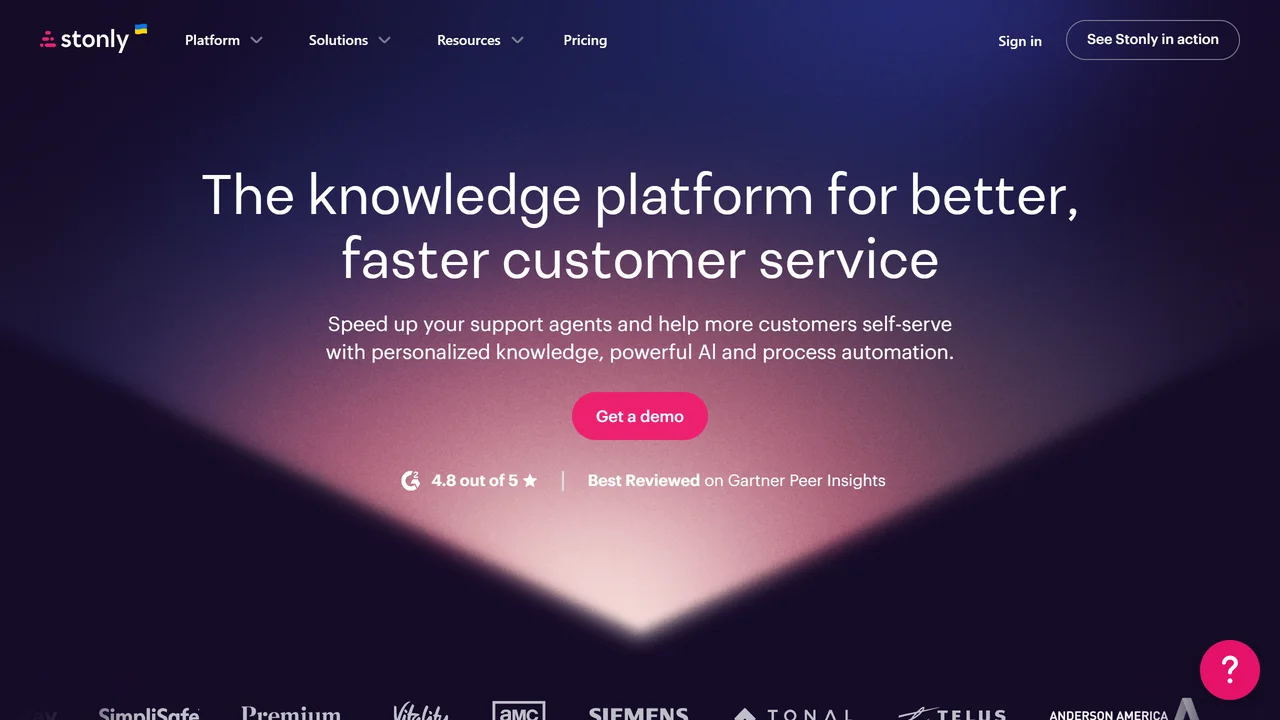
What is Stonly?
Stonly is a knowledge management platform designed specifically for customer service teams. It enables you to create interactive, step-by-step guides and explanations that help customers solve problems quickly and independently. Unlike traditional static FAQs or knowledge bases, Stonly's guides are dynamic and can be embedded directly into your product, website, or help center. This reduces the need for live support, lowering support costs while improving customer satisfaction.
Key features include a drag-and-drop editor for building guides without coding, conditional logic that shows different steps based on user input, and analytics to track which guides are most effective. Stonly integrates with popular tools like Zendesk, Intercom, and Salesforce, allowing support agents to share guides directly in conversations. The platform also supports multimedia content, such as videos and images, to make instructions clearer.
Benefits for customer service teams include reduced ticket volume, faster resolution times, and consistent answers across all channels. Customers benefit from self-service options that are easy to follow and tailored to their specific situation. For example, a SaaS company can use Stonly to create onboarding guides that adapt to each user's role, or an e-commerce site can provide troubleshooting steps for common issues like order tracking or returns.
Technical details: Stonly offers a cloud-based SaaS solution with a REST API for custom integrations. Guides are responsive and work on mobile devices. The platform includes role-based access control, version history, and SEO optimization for public guides. Pricing is based on the number of guides and users, with a free trial available. Stonly is GDPR compliant and offers SSO for enterprise customers.
Use cases range from internal knowledge bases for support agents to customer-facing help centers. Companies like Doctolib and Back Market use Stonly to reduce support tickets by up to 40%. Overall, Stonly empowers teams to deliver better self-service experiences while freeing up agents to handle complex issues.
Use Cases
Key Features
drag and drop editor conditional logic analytics tracking multimedia support Zendesk integration Intercom integration Salesforce integration step by step guides self service knowledge base embedded guidesWho is it for?
customer service teams, support agents, help desk managers, SaaS companies, e, commerce businesses, product teams, customer success teams